

Navigating reform to regulations on sewage sludge
Published: 4 February 2026
The Department for Environment Food and Rural Affairs (Defra) has launched a consultation on the regulatory framework governing the application of sewage sludge to agricultural land.
94.4% of sludge produced by English water and sewerage companies is reused on agricultural land as a source of vital plant nutrients and organic matter. It is applied in several forms, including digested cake (~73%) and lime-treated cake (~22%) which can both be stored in field heaps, as well as thermally dried pellets (~5%) that are spread onto land.
Sludge is regulated under the Sludge (Use in Agriculture) Regulations 1989, which apply specifically to sludge from wastewater treatment, and sits outside the environmental permitting framework now applied to most other waste-to-land activities.
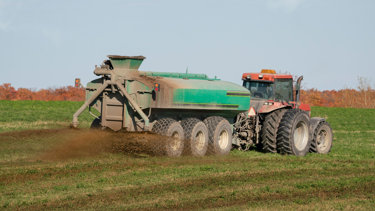
In the years following the legislation’s introduction, understandings of the chemical complexity of sludge and the performance of treatment processes has continued to develop, alongside wider changes in waste regulation, prompting consideration of whether the current framework remains appropriate.
Against this backdrop, Defra is now consulting on three options to modernise the regulatory regime.
| Reform option | Summary | Impact |
|---|---|---|
|
Option 1: Revoke the Sludge (Use in Agriculture) Regulations 1989 and regulate under the Environmental Permitting Regulations 2016. |
Sludge treatment, storage and land application would be regulated through the Environmental Permitting Regulations 2016. Water companies would shift from a rules-based system to a permitted compliance model, with clearer operating conditions, stricter monitoring requirements, and enhanced regulatory scrutiny. |
Water companies would face new permit application and annual subsistence charges, increasing operational costs. They would also need more formal governance, stronger audit trails, and increased contractor oversight to meet compliance expectations. |
|
Option 2: Amend the Sludge (Use in Agriculture) Regulations 1989 and introduce a charging scheme. |
Updates the existing regulations to reflect modern environmental and agricultural needs. A charging scheme would provide sustainable funding for regulatory monitoring, compliance checks, and enforcement activities. |
Companies would experience higher regulatory costs and more intensive oversight, including more inspections, detailed reporting requirements, and a more structured regulatory environment overall. |
|
Option 3: Update standards through non‑regulatory means (e.g. codes of practice or guidance). |
Standards could be updated quickly based on new evidence, allowing faster introduction of controls on emerging contaminants without legislative delays. Underlying legislation remains unchanged. |
Core legal duties remain the same, but updated guidance could introduce new expectations. Operational adjustments may be needed, though with potentially less resource for regulatory oversight. |
While all three options are being consulted on, option 1 is most likely to be implemented as it aligns sludge management with how other waste streams are already regulated under the Environmental Permitting Regulations.
However, tighter regulatory controls inevitably come with funding implications, and this will be challenging at a time when bill affordability is already a major pressure for the sector.
There is also a risk that more stringent permitting requirements could delay or prevent permits from being granted. This may drive up additional treatment costs, requiring significant capital expenditure or upgraded sludge infrastructure, leaving water companies with limited options for managing growing volumes of sludge.
A further risk is the increased pressure on the agricultural land bank available for recycling sludge, as some sites may become unsuitable due to environmental risks, increased scrutiny of higher risk activities, or concerns of cumulative impacts. As a result, repeated application to the same farmland may become less acceptable. If public sentiment towards sludge deteriorates, this could further increase regulatory pressure, accelerating restrictions on permits.
Navigating the upcoming reforms
We can provide support in navigating the upcoming reforms by providing comprehensive scenario planning and war-gaming of potential regulatory outcomes, helping to understand the impacts on your asset base and long-term investment needs.
Through detailed cost, commercial and supply chain intelligence, our team can provide clear visibility of the financial and operational implications of different investment options.
We can provide clear, streamlined options appraisals and cost-benefit analyses that help compare investment choices and prioritise best value-for-money solutions. Our team applies deep regulatory expertise to turn complex information into clear recommendations aligned with regulatory expectations.
We also support clients with proactive horizon scanning to assess the likely impacts on the price review, bioresources strategy, DWMP, and WINEP, ensuring policy developments are translated into informed programme planning, effective project delivery, and strengthened organisational capability.
Latest resources
 Insights
Beyond the badge: How maturity assessments can turn conformance into capability
 Insights
Reflecting on final determinations by the CMA on 2024 price review and looking ahead to PR29
 Insights
Navigating reform to regulations on sewage sludge
 Insights
Improving asset-health modelling for a more resilient water sector
Here to solve your biggest challenges and grow sustainable value
Our expert consultants are available to broaden your thinking, lead transformation, and help you achieve successful outcomes.
Contact our experts